...
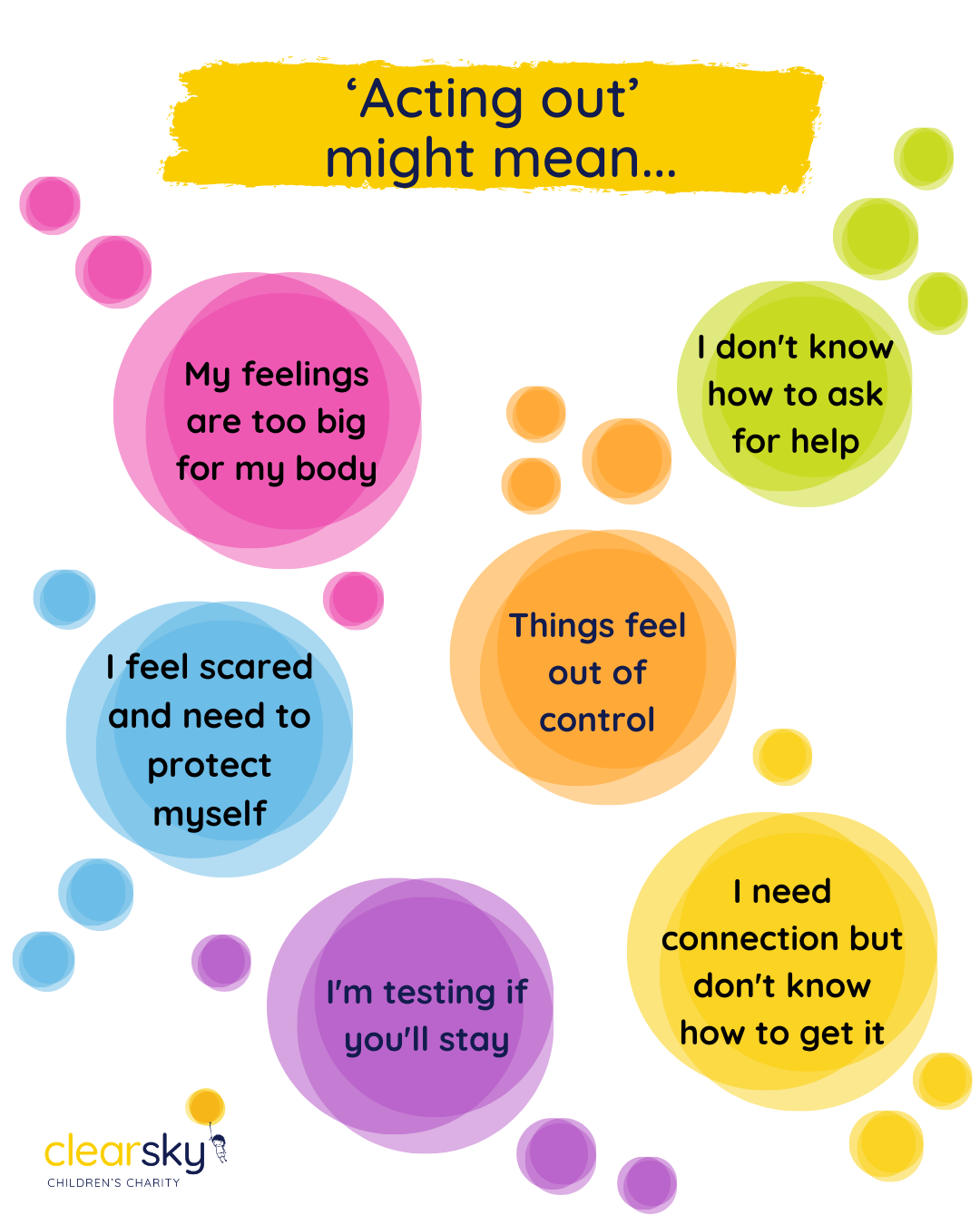
- My feelings are too big for my body
- I don't know who to ask for help
- Things feel out of control
- I feel scared and need to protect myself
- I'm testing if you'll stay
- I need connection but don't know how to get it
When children "act out," our first instinct is often to focus on stopping the behaviour. But what if we paused and asked: what is this behaviour trying to tell me?
Acting out is rarely about defiance or attention-seeking. More often, it's a child's way of communicating overwhelming feelings they don't have words for, or testing whether we'll stay even when things get hard.
These children might be scared and using aggression as protection.
They might desperately need connection but only know how to get attention through negative behaviour.
Their feelings might be so big that their bodies can't contain them, and the explosion we see is the overflow.
When we respond to acting out with consequences alone, we miss the message. When we respond with curiosity and compassion - "I wonder what's happening for you right now" - we open the door to real understanding and change.
This doesn't mean accepting harmful behaviour. It means addressing the behaviour while also addressing the unmet need underneath it.
Creating school environments where staff can respond to challenging behaviour with both boundaries and compassion requires training and support. Our Emotionally Healthy Schools platform helps schools understand what drives difficult behaviour and develop trauma-informed responses:
👉 https://clear-sky.org.uk/emotionally_healthy_schools/




Responses